Market4Me
21 UGC Ad Ideas Every Marketing Agency Owner Should Try
For agencies, UGC ads aren't just a tactic—they're a strategic imperative. This guide cuts through the noise, providing 21 specific, high-impact UGC ad ideas designed to help marketing agency owners drive unparalleled client results and scale creative output without breaking the bank.
For agencies, UGC ads aren't just a tactic—they're a strategic imperative. This guide cuts through the noise, providing 21 specific, high-impact UGC ad ideas designed to help marketing agency owners drive unparalleled client results and scale creative output without breaking the bank.
Key takeaways
- UGC ads offer unparalleled authenticity and cost-efficiency, crucial for scaling client ad performance across platforms like TikTok and Instagram Reels.
- Implement a diverse mix of UGC ad types, from problem/solution narratives and unboxings to educational hacks and trend-jacking, to combat creative fatigue.
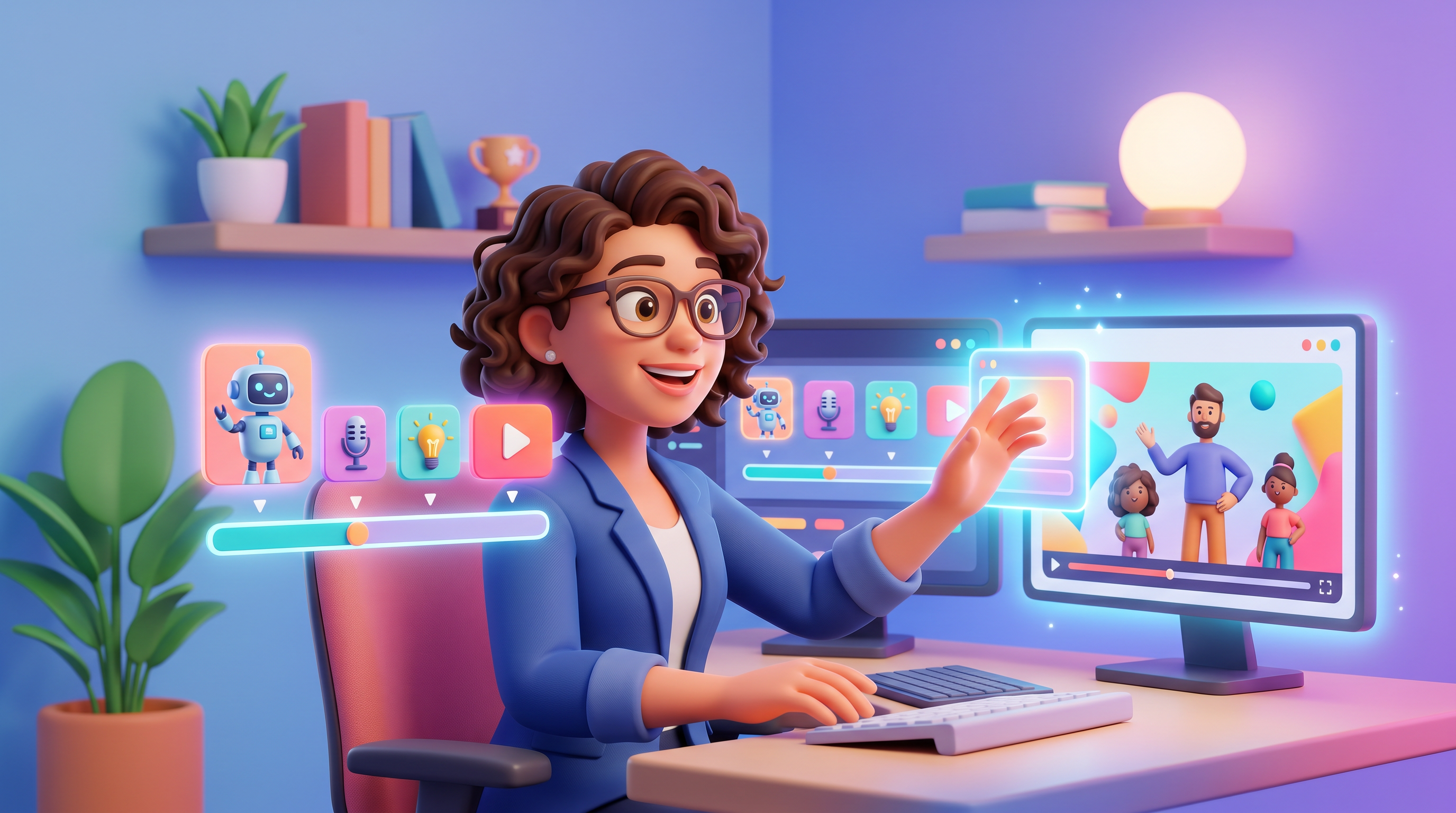
- Agencies can leverage AI tools like Market4Me.ai to generate high-volume, brand-consistent UGC-style videos, streamlining workflow and reducing production overhead.
- Focus on clear briefs for creators (or AI) and rigorous A/B testing to identify winning creatives and optimize campaign spend.
- A structured approach to UGC, whether sourced from customers or generated by AI, provides a significant competitive advantage for marketing agencies.
- Prioritize authenticity over perfection; over-production kills UGC effectiveness and consumer trust.
Let’s be blunt: if your agency isn’t leveraging User-Generated Content (UGC) ads, you’re leaving client money on the table. In today’s hyper-saturated ad landscape, polished perfection is ignored. Authenticity wins. UGC isn’t a “nice-to-have” — it’s the most powerful lever for agencies to scale creative velocity, slash CPAs, and deliver undeniable ROI across TikTok, Reels, and Shorts. This isn’t another fluffy list; it’s 21 battle-tested ugc ad ideas, engineered specifically for marketing agency owners ready to dominate their clients’ niches.
Why UGC Ads Are Non-Negotiable for Marketing Agencies Today
In an advertising landscape saturated with polished, high-budget productions, consumers crave authenticity. UGC ads cut through the noise because they come from real people, often with relatable problems and genuine solutions. For a marketing agency, this translates to several key advantages:
- Enhanced Authenticity and Trust: UGC isn’t just credible; it’s relatable. Consumers trust peers, not polished brand messaging. For agencies, this means bypassing skepticism and building immediate rapport, translating directly into higher engagement metrics.
- Lower Production Costs (and Perceived Costs): Forget bloated production budgets. While managing creators requires strategy, the per-asset cost of UGC is a fraction of traditional shoots. Crucially, its ‘raw’ aesthetic isn’t a flaw; it’s a feature, boosting authenticity and making ads feel native, not intrusive. This cost efficiency allows agencies to test more, faster.
- Superior Performance Metrics: This isn’t theory; it’s data. Our internal benchmarks consistently show UGC ads delivering significantly higher CTRs and dramatically lower CPAs. Their native, “scroll-stopping” look means users engage, not skip, making them indispensable for optimizing ad spend.
- Scalability and Creative Velocity: Ad fatigue is the silent killer of campaigns. Agencies need a relentless pipeline of fresh creative. UGC, particularly when amplified by AI tools like Market4Me.ai, offers unparalleled scalability. Generate dozens of unique ad variants in hours, not weeks, extending campaign longevity and fueling aggressive A/B testing.
- Direct Problem-Solution Narratives: UGC excels at the most fundamental sales principle: problem-agitate-solve. Users naturally articulate pain points and demonstrate solutions, creating compelling, conversion-focused narratives that resonate deeply with target audiences.
For agencies, mastering UGC isn’t merely adding a tactic; it’s building the most sustainable, high-performance creative engine in your arsenal. Ignore it at your peril.
The Core Framework: Understanding UGC Ad Types
Before we dive into the specific ugc ad ideas, let’s establish a strategic framework. Categorizing UGC by its primary intent helps agencies select the most impactful approach for a client’s product, audience, and campaign objective:
| UGC Ad Type Focus | Primary Goal | Best For Products That… | Key Platform Suitability | Agency Effort (Creative) |
|---|---|---|---|---|
| Demonstration | Educate, Show Value | Have clear features, a process, or visible results | TikTok, Reels, YouTube Shorts, Facebook | Medium (clear brief needed) |
| Testimonial | Build Trust, Social Proof | Solve a common problem, have strong reviews | All platforms, especially where trust is key | Low (authentic voice) |
| Relatability | Connect, Empathize | Address universal pain points, lifestyle brands | TikTok, Reels, Snapchat | Low-Medium (trend-aware) |
| Aesthetic/Lifestyle | Inspire, Aspiration | Are visually appealing, luxury, fashion, home goods | Instagram Reels, Pinterest, TikTok | Medium (visual brief needed) |
| Trend-Focused | Maximize Reach, Virality | Can be integrated into current memes/sounds | TikTok, Reels | High (requires constant monitoring) |
| Unboxing/Haul | Generate Excitement, Reveal | Are physical products, subscription boxes | TikTok, YouTube Shorts, Instagram Reels | Low-Medium (product provided) |
| Educational/Hack | Provide Value, Authority | Offer tips, solve niche problems, software | TikTok, YouTube Shorts, LinkedIn (B2B) | Medium (expertise required) |
| Comparison | Differentiate, Convince | Have direct competitors, clear advantages | YouTube Shorts, TikTok, Facebook | Medium (requires competitor knowledge) |
Now, let’s explore 21 actionable ugc ad ideas your agency can deploy.
21 UGC Ad Ideas Every Marketing Agency Owner Should Try
01. The Problem-Agitate-Solve (PAS) Testimonial
Idea: A user vividly articulates a specific pain point, amplifies the frustration, and then dramatically reveals the client’s product as the ultimate solution, detailing the tangible benefits and transformation. Why it works: This is storytelling 101, but incredibly effective. It immediately hooks viewers with a relatable struggle, builds empathy, and positions the product as the hero. It’s a conversion powerhouse for products solving clear, common pain points. Implementation:
- Brief: “Start with a direct statement of a problem. ‘My skin was always dull and breaking out, no matter what I tried!’ Agitate the problem: ‘It made me so self-conscious, I hated going out without heavy makeup.’ Then, the reveal: ‘But then I found [Product Name]…’ Show the product, explain how it solved the problem, and showcase the positive outcome: ‘Now my skin glows, and I feel confident bare-faced!’”
- Focus: Authenticity over perfection. Raw, unscripted emotion is key.
02. The “Day in the Life” Integration
Idea: A user naturally integrates the client’s product into their daily routine, showcasing its seamless utility and benefits without overt selling. Why it works: This builds aspiration and demonstrates practical application. It feels less like an ad and more like a lifestyle recommendation, making the product desirable. Implementation:
- Brief: “Film snippets of your day where [Product Name] naturally fits in. For a productivity app: ‘Morning routine: coffee, quick check of my [App Name] tasks, then off to work.’ For a healthy snack: ‘Mid-afternoon slump? Not with my [Snack Brand]! Quick energy boost before my workout.’ Show, don’t tell, how it enhances their day.”
03. The Unboxing/First Impression
Idea: A user unboxes a product, sharing their genuine, unfiltered first reactions, excitement, and initial thoughts on features or design. Why it works: This taps into the anticipation and joy of receiving something new. It builds excitement and provides a detailed, yet authentic, look at the product from a user’s perspective. Implementation:
- Brief: “Capture the entire unboxing process. Focus on the packaging, the reveal, and your immediate reactions. ‘Wow, this packaging is so sleek!’ ‘Look at this color!’ Highlight a key feature you notice first. ‘I love how lightweight this [Product] is right out of the box.’ Emphasize genuine surprise and delight.”
04. The “Before & After” Transformation
Idea: A user visually demonstrates a dramatic change or improvement achieved using the client’s product, often with a split screen or quick cuts. Why it works: This is incredibly compelling for products with visible results (e.g., beauty, fitness, home improvement, software dashboards). It provides undeniable proof of efficacy. Implementation:
- Brief: “Clearly show the ‘before’ state – the problem, the mess, the old way. Then, showcase the ‘after’ state, highlighting the product’s role in the transformation. For a cleaning product: ‘My kitchen counter was a disaster (shows messy counter). One spray of [Product], and look at this shine!’ For a photo editing app: ‘My original photo was so dull (shows original). With [App Name], look at the vibrant colors now!’”
05. The “Hack/Tip” Tutorial
Idea: A user shares a clever tip, trick, or life hack using the client’s product, demonstrating its versatility or an unexpected benefit. Why it works: This provides immediate value to the viewer, positions the product as intelligent or innovative, and encourages engagement through learning. Implementation:
- Brief: “Think of a unique way you use [Product Name] that most people might not know. ‘Did you know you can use [Product X] to do Y? Here’s how!’ For a kitchen gadget: ‘My secret for perfectly diced onions? This [Gadget Name]!’ For a software tool: ‘Pro-tip: use [Feature Z] in [Software Name] to automate your reports in seconds!’”
06. The Comparison/Versus Ad
Idea: A user compares the client’s product to a common alternative (or even a generic solution), highlighting the superior benefits and why the client’s product is the clear winner. Why it works: Directly addresses competitor concerns and educates the audience on key differentiators. It helps overcome objections and justifies a purchase. Implementation:
- Brief: “Choose a common alternative or a problem you used to solve differently. ‘I used to use [Old Method/Product] for [Task], but it was slow/ineffective (shows frustration). Then I switched to [Client Product], and here’s why it’s a game-changer (shows side-by-side benefits).’ Be clear about the advantages.”
07. The “Satisfying Sound” ASMR
Idea: Focuses on the satisfying sounds associated with using the product (e.g., click, pour, crunch, peel), creating an immersive and sensory experience. Why it works: ASMR content is highly engaging and can create a strong emotional connection. It’s particularly effective for products with tactile or auditory appeal. Implementation:
- Brief: “Highlight the sensory experience. For a coffee maker: ‘The satisfying pour of my [Coffee Maker Brand] every morning (focus on sound).’. For a skincare product: ‘The gentle click of the pump, the smooth application (focus on sound and texture).’. No talking, just sounds and visuals.”
08. The Trend-Jacking/Meme Integration
Idea: A user integrates the client’s product into a current viral trend, popular sound, or meme format on platforms like TikTok or Reels. Why it works: Taps into existing virality, increasing reach and making the ad feel native and entertaining rather than intrusive. Requires constant monitoring of trends. Implementation:
- Brief: “Find a trending sound or meme format. Adapt it to showcase [Product Name] in a humorous or relevant way. ‘Me trying to [achieve goal] without [Product Name] (shows struggle). Me after getting [Product Name] (shows success with trending sound).’ Be quick to jump on new trends.”
09. The “Myth Busting” Ad
Idea: A user debunks common misconceptions or fears about a product category, then positions the client’s product as the solution that overcomes these issues. Why it works: Educates the audience, builds trust by addressing skepticism, and differentiates the product from competitors. Implementation:
- Brief: “Start with a common myth: ‘Everyone thinks [Product Category] is expensive/complicated/doesn’t work.’ Then, bust the myth using [Client Product]: ‘But with [Product Name], it’s actually affordable/easy/delivers real results (shows proof).’.”
10. The “Behind the Scenes” (User Perspective)
Idea: A user shares a glimpse into their process or creative workflow where the client’s product plays a crucial, often unseen, role. Why it works: Adds a layer of authenticity and transparency. It shows the product in a real-world, functional context, appealing to users who value process and craftsmanship. Implementation:
- Brief: “Show how [Product Name] helps you achieve a specific outcome. For an artist: ‘My secret weapon for smooth blending? My [Art Supply Brand] brushes!’ For a baker: ‘The unsung hero of my perfect sourdough? My [Kitchen Scale Brand]!’ Focus on the tool’s contribution to the final result.”
11. The “Quick Review” (Pros & Cons)
Idea: A user gives a rapid-fire, honest review of the product, highlighting its main benefits and perhaps one minor “con” to enhance authenticity. Why it works: Consumers appreciate honesty. A balanced review, even with a minor drawback, builds immense trust and helps manage expectations, leading to more qualified leads. Implementation:
- Brief: “In 30-60 seconds, give your honest take. ‘Here are 3 things I LOVE about [Product Name] and 1 thing I wish was different.’ Focus on tangible benefits and keep any ‘con’ minor and easily digestible.”
12. The “Product in Action” (Extreme Use Case)
Idea: A user demonstrates the product performing exceptionally well under challenging or unique circumstances, showcasing its durability, power, or specific capabilities. Why it works: Proves the product’s robustness and effectiveness in a memorable way. Great for tools, outdoor gear, or performance-oriented products. Implementation:
- Brief: “Put [Product Name] to the test! For a durable phone case: ‘I dropped my phone from here (shows height) with my [Case Brand] on, and look!’ For a cleaning product: ‘This stain was impossible until I tried [Product Name] (shows tough stain disappearing).’.”
13. The “Cost-Saving” Showcase
Idea: A user explains how using the client’s product has saved them money, time, or effort, quantifying the benefits where possible. Why it works: Directly appeals to a universal desire for efficiency and savings. Provides a clear ROI for the consumer. Implementation:
- Brief: “Focus on the savings. ‘I used to spend $X a month on [Old Solution], but [Product Name] costs only $Y and does it better!’ Or, ‘This [Software Name] saves me 2 hours of manual work every week – that’s 8 hours a month I get back!’”
14. The “Reaction” Video
Idea: A user films their genuine reaction to experiencing the product for the first time, or to a specific feature, often with an element of surprise or delight. Why it works: Captures raw emotion and authenticity. It’s highly engaging and can be very persuasive if the reaction is genuinely positive. Implementation:
- Brief: “Focus on a specific ‘reveal’ moment. For a smart home device: ‘Watching my lights turn on with just my voice for the first time – my reaction!’ For a new flavor of food: ‘Trying [New Product Flavor] for the first time – is it worth the hype?’.”
15. The “Educational Series” Snippet
Idea: A short, digestible clip from a longer educational series a user might create, highlighting a key learning or benefit derived from the client’s product. Why it works: Positions the product as a tool for learning or self-improvement. Appeals to audiences seeking knowledge and growth. Implementation:
- Brief: “If you were teaching someone how to [achieve goal], how would [Product Name] fit in? ‘Lesson 1: Mastering [Skill] with [Product Name] – here’s the secret!’ Or, ‘Quick tip from my [Course Name]: always use [Product Name] for [specific task].’.”
16. The “Gift Idea” Showcase
Idea: A user presents the client’s product as an ideal gift for a specific type of person or occasion, explaining why it’s thoughtful and practical. Why it works: Taps into gift-giving occasions, expanding the product’s market. Positions the product as a desirable item for others. Implementation:
- Brief: “Think of someone in your life. ‘This [Product Name] is the perfect gift for the [type of person] in your life because…’ Highlight features that make it a great present. ‘My mom loves gardening, so this [Gardening Tool Brand] is perfect for her!’”
17. The “Behind the Brand” (User Story)
Idea: A user shares their personal connection to the brand’s mission, values, or origin story, explaining why they resonate with it. Why it works: Builds emotional connection and brand loyalty beyond just the product. Appeals to consumers who care about ethical sourcing, sustainability, or community. Implementation:
- Brief: “Share why you connect with [Client Brand]'s mission. ‘I love that [Brand Name] uses sustainable packaging – it aligns with my values.’ Or, 'As a small business owner, I really admire [Brand Name]‘s journey.’.”
18. The “Challenge” Participation
Idea: A user participates in a brand-specific challenge (e.g., 30-day fitness challenge, recipe challenge) and showcases their progress or results using the product. Why it works: Drives engagement, builds community, and provides compelling proof of concept over time. Implementation:
- Brief: “Document your journey through the [Brand Name] challenge. ‘Day 1 of the [Fitness Challenge] with my [Supplement Brand]!’ Show progress, struggles, and ultimate success. ‘After 30 days, look at these results!’”
19. The “Repurpose/DIY” Ad
Idea: A user demonstrates creative ways to repurpose the product’s packaging or use the product in an unconventional DIY project. Why it works: Appeals to eco-conscious consumers and those who love creativity. Shows the brand’s versatility and encourages a deeper interaction with the product. Implementation:
- Brief: “How can you give [Product Name]'s packaging a second life? ‘This [Product Brand] jar is too pretty to throw away – I’m turning it into a succulent planter!’ Or, ‘Using leftover [Material from Product] for a quick DIY project!’”
20. The “Quick Fix/Instant Gratification”
Idea: A user quickly solves a common, annoying problem using the client’s product, emphasizing speed and ease of use. Why it works: Taps into the desire for immediate solutions and convenience. Great for impulse buys or problem-solving products. Implementation:
- Brief: “Show a common annoyance and how [Product Name] fixes it instantly. ‘My phone charger always falls behind the desk! (shows frustration). Not anymore with my [Cable Clip Brand]!’ Or, ‘Spilled coffee? No problem with [Cleaning Spray Brand] (shows quick clean-up).’.”
21. The “AI-Generated UGC” Showcase
Idea: A user (or AI persona) demonstrates how an agency can leverage AI platforms to rapidly generate diverse UGC-style videos, highlighting the efficiency and scalability. Why it works: Directly addresses agency pain points around creative volume and cost. Positions Market4Me.ai as the solution for scaling ugc ad ideas. Implementation:
- Brief: “Show, don’t just tell, how an AI platform like Market4Me.ai can create UGC. ‘Struggling to get enough UGC for clients? (shows frustration). With Market4Me.ai, I can generate 10 variations in minutes! (shows AI interface/generated videos).’ Emphasize speed, variety, and brand consistency. This is where an internal link to our AI video marketing platform is crucial.”
Ready to put these ugc ad ideas into action and revolutionize your clients’ ad performance? Try Market4Me.ai today and unlock unparalleled creative scalability.
Put your marketing on autopilot
Paste your URL and let Market4Me.ai build, schedule and post your content for you.
Start free →Frequently asked questions
What makes a UGC ad effective for marketing agencies?
Effective UGC ads for agencies are ruthlessly authentic, hyper-relatable, and blend seamlessly into native platform feeds. They cut through the noise by showcasing real users solving real problems, telling compelling personal stories, or demonstrating clear value. This genuine connection consistently drives higher engagement, lower CPAs, and superior conversion rates compared to polished, traditional advertising.
How do marketing agencies typically source UGC for clients?
Agencies employ a multi-pronged approach to sourcing UGC. This includes direct outreach to existing customers (e.g., review campaigns, contests), strategic partnerships with micro-influencers who genuinely align with the brand, and leveraging dedicated UGC creator platforms. Critically, forward-thinking agencies are now integrating AI-powered platforms like [Market4Me.ai](/solutions/ai-ugc-generator) to generate high-volume, on-brand UGC-style videos at unprecedented speed and scale, circumventing traditional sourcing bottlenecks.
Can UGC ads be used effectively for B2B clients, or are they only for B2C?
Absolutely. UGC is not exclusive to B2C. For B2B clients, the 'user' shifts from consumer to professional. Think employee-generated content showcasing company culture, client testimonials detailing tangible ROI from a service or software, or industry experts sharing insights using a B2B tool. The core principle of authentic peer validation and problem-solving remains just as potent, if not more so, in the B2B landscape where trust and proven results are paramount.
What are the best platforms for running UGC ad campaigns?
For UGC ad campaigns, short-form video platforms are non-negotiable. TikTok dominates, rewarding authentic, native-style content with unparalleled organic reach. Instagram Reels, YouTube Shorts, and Facebook (especially for in-feed video) are also critical. The key is that these platforms prioritize content that feels organic to the user experience, making UGC's raw, relatable aesthetic perfectly suited for maximum engagement and minimal ad fatigue.
How much do UGC ads cost to produce for an agency's client?
The cost of UGC for agencies is highly variable, but generally far more efficient than traditional production. Individual creator rates can range from $50 to $500+ per video, influenced by creator experience, usage rights, and script complexity. However, the true game-changer for agencies is leveraging AI video platforms like [Market4Me.ai](/solutions/ai-ugc-generator). These offer predictable, credit-based models, allowing agencies to generate dozens, even hundreds, of high-quality UGC-style videos for a fixed monthly fee, drastically reducing the per-asset cost and enabling aggressive testing.
How can AI help marketing agencies scale UGC ad creation?
AI is revolutionizing UGC creation for agencies. Platforms like Market4Me.ai act as a force multiplier: they analyze client brand guidelines and product details to generate tailored content strategies, write compelling scripts, and even produce full short-form videos featuring diverse [AI influencers](/solutions/ai-influencer-generator). This capability allows agencies to bypass traditional bottlenecks, generate an immense volume of varied UGC-style creatives rapidly, combat ad fatigue effectively, and conduct extensive A/B testing at a scale previously impossible with manual production.
What's a common mistake agencies make when running UGC ad campaigns?
The most egregious mistake agencies make is trying to 'over-produce' UGC. Over-scripting, excessive editing, or demanding studio-grade quality instantly kills the authenticity that makes UGC powerful. It stops being 'user-generated' and becomes 'brand-generated trying to look like UGC,' which consumers see through immediately. Another critical error is insufficient creative testing; agencies must generate and high volume of diverse creatives to truly combat ad fatigue and unlock optimal performance.